Setting realistic fitness goals starts with being specific about what you want and giving yourself a clear timeline. Vague goals like “lose weight” or “get fit” rarely work because there’s nothing concrete to work towards.
This is why most fitness goals fail. They’re too vague, completely unrealistic, or never tracked at all. Saying “I want to get healthy” sounds good, but if you can’t see progress, motivation will fade fast.
In this post, you’ll learn how you can set specific fitness goals that you will stick to. We’ll also cover how to track progress beyond just your body weight and adjust your plan when progress slows or life gets busy.
First, we’ll look at how SMART goals can help you stay consistent with strength, sleep, and movement.
SMART Fitness Goals: Improve Strength, Sleep, and Daily Activity
SMART goals help you turn your vague fitness ideas into specific targets you will actually follow. They give your training structure and make it easier to track progress over time. Here’s how to apply this method to your own fitness plan.
What Are SMART Fitness Goals?
SMART stands for Specific, Measurable, Achievable, Relevant, and Time-bound. This framework helps turn your loose ideas into a clear plan.
For example, instead of saying “I want to get stronger,” you’ll say “I’ll do strength training three times per week for six weeks.”
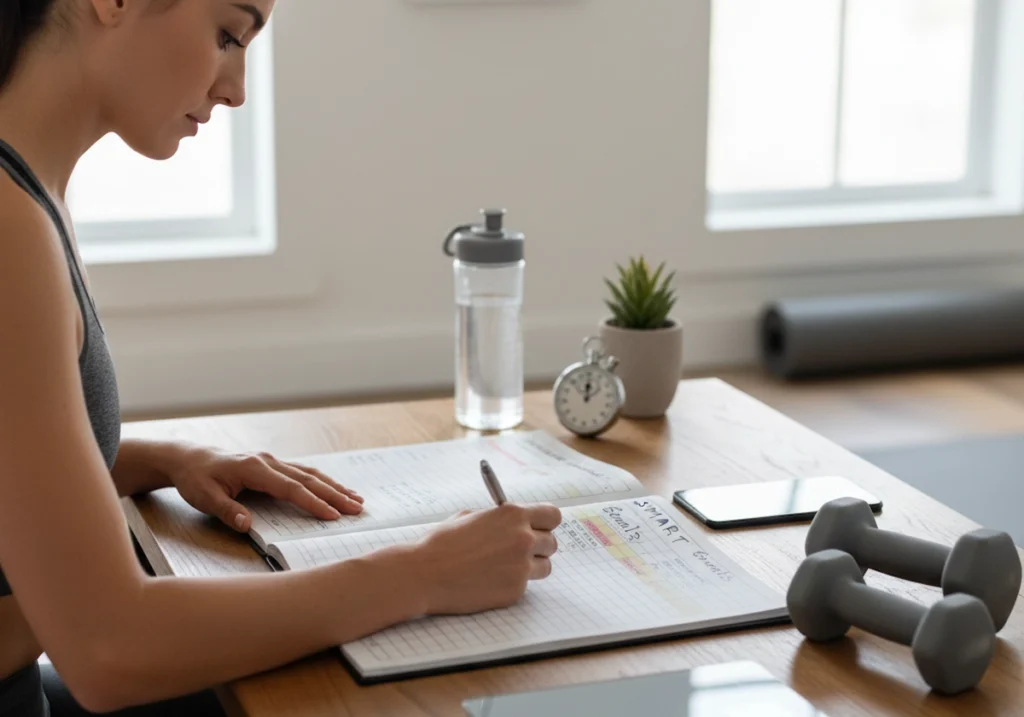
Notice the difference? One is wishful thinking, while the other gives you a clear action, a number to hit, and a deadline to work towards.
Examples of Specific Fitness Goals
Good fitness goals focus on one thing at a time to keep you physically active, and the best ones are easy to measure.
So let’s say you want better sleep, then you might aim to put your phone away 30 minutes before bed each night.
For building strength, it could be focusing on upper body workouts and aiming to add 2kg of lean muscle over two months (clear action, target, and timeframe). And if your goal is to move more during the day, setting a target like 10,000 steps five days a week gives you a clear and practical goal to follow.
Use Project Management Thinking
Your body responds well to structure, so it makes sense to treat your training like a long-term project. Start by mapping out milestones at week two, week four, and week eight to check how you’re tracking. Then, you can use time tracking to log your sessions and start noticing patterns in your energy levels and recovery.
For example, you might check your progress at week two by seeing if you can do five more push-ups than the first week. Then at week four you can increase your running distance by half a kilometer, and at week eight by lifting slightly heavier weights.
This way, you can track your sessions to see patterns like your peak energy days, muscle soreness, and recovery time between workouts.
Break the Plan Into Sprints
The idea of sprint planning comes from project management software like Jira, and it works brilliantly for fitness too. Instead of setting one big goal that’s months away, you’ll split your plan into two-week sprints. Each sprint will have its own smaller goals and a quick review at the end.
The reason this works so well is that you get regular wins along the way to keep you motivated. So you don’t have to wait months to feel any sense of progress.
Track Your Progress: Identify Areas to Adjust and Stay Focused
Tracking your progress shows you what’s working and what needs to change. Without it, you’re really just guessing and hoping for the best. The good news is that you only need a few simple habits to stay focused and make better training decisions. Let’s see what they are.
What Should You Track?
Firstly, you should track more than just your body weight. Logging reps, rest times, and muscle soreness will give a better idea of your progress.

Apart from physical activities, also pay attention to your energy levels, sleep quality, and mood throughout the week (to understand how your body is recovering).
And don’t overlook the simple things either, like how your clothes fit, progress photos, or basic mobility tests like squats and stretches. This will reveal any changes in your body.
Tools for Easy Tracking
Now, you don’t really need to buy those expensive gears like smartwatches or fitness trackers to get started. We find a simple journal, spreadsheet, or free mobile app is enough to track your progress effectively. For example, you could write:
- Energy: “Felt tired before workout, more alert after.”
- Performance: “Did 3 sets of 10 push-ups at 12kg.”
- Recovery/Soreness: “Sore in shoulders, needed longer rest between sets.”
If you want more detailed data though, wearables like Fitbit (also an app) or Garmin can track your heart rate, sleep patterns, and daily steps without you having to think about it.
How Fintech UX Influences Fitness Tech
Fitness apps are becoming easier to use, much like mobile banking. You can open the app, see your stats, and check progress in seconds.
The best apps, like MyFitnessPal (for nutrition and overall tracking) and Strava (for running and cycling), are smooth, engaging, and make tracking your fitness simple. This design approach comes from financial tech, which focuses on keeping tools easy, accessible, and user-friendly for everyone.
What to Do When Progress Stalls
Hitting a plateau doesn’t mean you’ve failed, but you might need to adjust something in your routine. First, check for any missed workout days, signs of poor recovery like persistent soreness or fatigue, and if you’ve pushed intensity up too quickly.
Once you identify the issue, rethink your goal with a project management mindset and ask yourself if your timeline is realistic or if the intensity needs adjusting.
Your aim here is to adapt every time you feel close to giving up. Because sometimes a small change like switching exercises or taking it easy for a week is all you need to get moving again.
Build Accountability and Feedback Loops
Accountability is what turns good intentions into lasting habits, so we recommend building some structure around it.

One simple method is to schedule a weekly review for yourself, almost like a personal progress report. Use that time to look back on the week and celebrate project milestones, even small ones like hitting four weeks of consistency.
You can also set a “progress reflection” reminder in your calendar or fitness app. That little nudge will help you check in with yourself regularly and keep your goals front of mind.
Stop Chasing Perfection and Start Seeing Real Fitness Progress Today
So, how are you feeling about setting clear fitness goals after reading this? Hopefully, you’ve picked up a few ideas you can start using straight away.
The main thing to remember is that you need to be consistent. Even small efforts will add up over time in ways that might surprise you. Our team has found that people who simply focus on showing up regularly tend to build more muscle and see better progress than those chasing flawless workouts.
Of course, life will get in the way sometimes. Injuries happen, schedules change, and motivation dips. When that happens, you just have to learn to adjust your goals rather than giving up on them completely.
And don’t forget to take a moment each week to celebrate the small wins. A quick journal entry or simple reflection can show you just how far you’ve come.
If you’re ready to keep the momentum going, head over to I Am Capable Fitness Coaching for more tips on building fitness habits that actually stick.