
Choosing between a beginner fitness program and an advanced one can feel overwhelming, especially when you see others at the gym doing complex splits and heavy lifts. It’s easy to wonder whether you should jump straight into that kind of training to get faster results.
The problem is that fitness doesn’t work that way. Your body needs time to adapt to stress, volume, and intensity. Jump ahead too fast, and progress often turns into burnout, nagging injuries, or weeks of lost momentum.
That’s why the right program depends on where you are right now, not where you want to be eventually. In this article, we’ll break down what separates beginner programs from advanced ones and how to choose the approach that supports steady progress without frustration.
Ready to figure out where you stand? Let’s dig in.
What Makes a Beginner Fitness Program Work?
Beginner fitness programs work because they prioritise proper form and sustainable habits over pushing maximum intensity right away. Two things make this approach effective.
Starting with Simple Movements and Gym Equipment
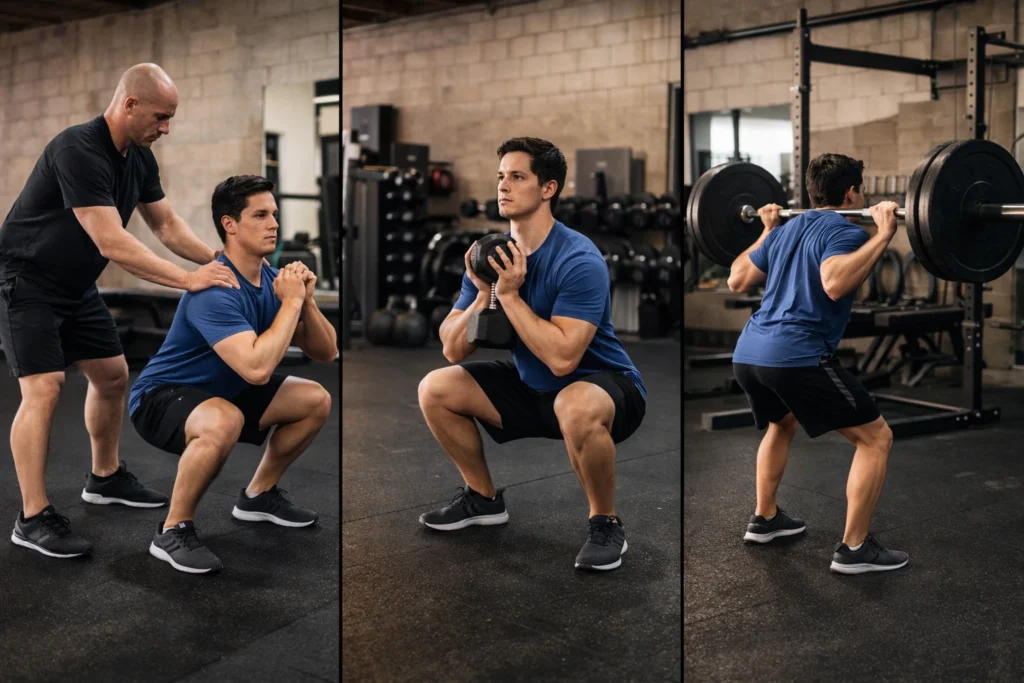
When you’re new to training, it’s better to use basic gym equipment like dumbbells and barbells first. They teach proper movement patterns without the complexity that machines add later.
Once you’re comfortable with those basics, you can move into compound exercises, which are movements that work multiple muscle groups at once (like squats or push-ups). These give you more strength gains with fewer exercises.
Learning these fundamental lifts now prevents form issues that limit your improvement down the road.
Building Consistency Over Intensity
You also need to figure out how often you should train each week. As a beginner, three to four sessions per week hit the sweet spot for most people we’ve worked with. It’s because that’s enough to build the habit without overdoing it.
This frequency also helps your body adapt gradually, so you’re not dealing with excessive soreness that makes you skip sessions. The goal is sustainable pacing that builds the habit first, then increases difficulty as showing up becomes automatic.
Advanced Programs: What Changes When You Level Up
Advanced programs change how you train once familiar workouts stop driving results. They shift the focus to higher volume, stricter progression, and more structured support, but only if your body can handle the added load. Here’s what changes when you level up.
Progressive Overload Becomes the Focus
At the advanced stage, progress no longer comes from simply showing up and repeating the same routines. Your body has already adapted, which means you need to add weight, reps, or sets in a more deliberate way to keep improving.
This is where progressive overload becomes the main driver of results. Small, planned increases are more significant than dramatic jumps. Yes, adding just 2.5kg to a lift over time might not feel impressive, but that steady progression is what separates continued gains from months of stagnation.
Specialised Training Splits and In-Club Support
The way you structure your training also changes. Instead of full-body sessions every workout, advanced programs often split the week by muscle group. This approach lets you train each area with higher intensity while still giving your body enough time to recover. For example, chest and triceps one day, back and biceps the next.
That extra focus often means relying on more specialised gym equipment, such as cable machines or speciality bars, to target muscles more precisely. In-club coaching becomes more valuable at this stage, too. When loads are heavier and movements more complex, having someone catch small form issues early can prevent injuries that derail progress.
Assess Your Fitness Level Before Choosing a Program
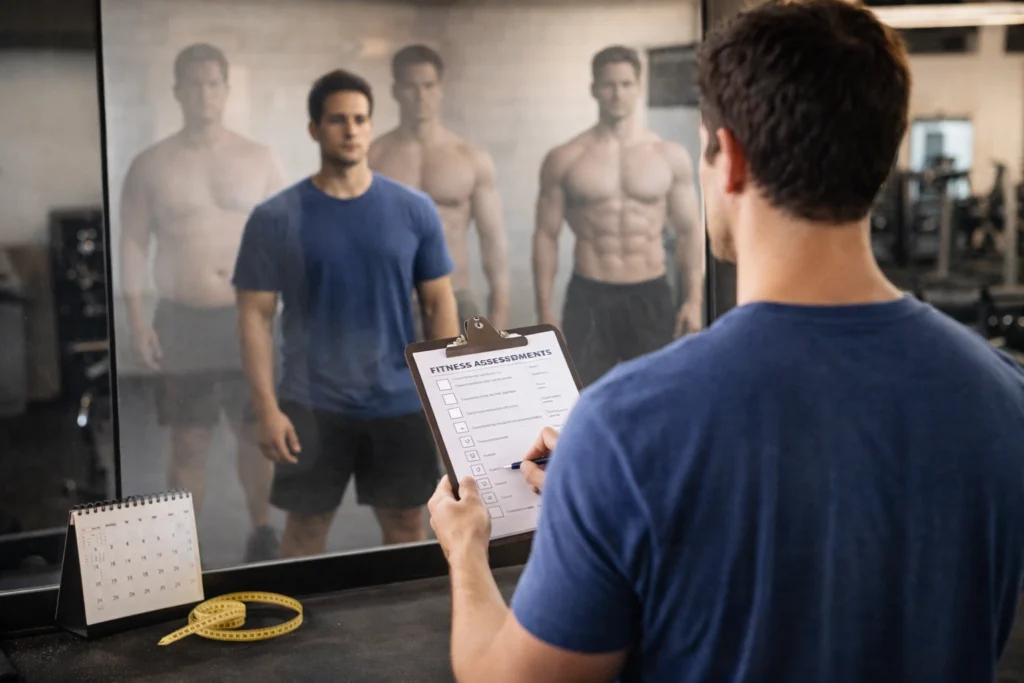
Jumping into an advanced program as a beginner is like signing up for a marathon when you’ve never run a 5K. You’ll burn out fast and probably get injured. That assessment might feel tedious upfront, but it prevents the frustration of picking a program your body isn’t ready to handle. To figure out where you stand, consider these fitness levels:
- Beginners (0-12 Months): You need to build your foundation first. Stick with full-body gym programs that teach foundational movement patterns consistently, so your muscles and connective tissues can adapt without overwhelming your recovery system.
- Intermediate Lifters (1-3 Years): At this stage, your body can handle more targeted volume. Workouts that split upper and lower body work well because they let you train each muscle group harder without the fatigue issues that come from daily full-body sessions.
- Advanced Athletes (3 Years): Simple approaches won’t cut it anymore. You’ll need specialised splits and periodisation because your body adapted to the basic programs that built your initial strength, and now needs more sophisticated stimulus to keep progressing.
- Recovery Ability: Your age and lifestyle affect progress, regardless of your experience. If you’re older or have a demanding job, extra rest days help prevent overtraining, even if your training age suggests you could handle more.
- Student Schedules: If you’re a current student juggling classes, assignments, and probably a part-time job, finding time gets tough. That’s why programs with shorter sessions (30-45 minutes) fit better around your commitments and make consistency easier when exam season hits (and exam week doesn’t care about your gains).
Getting honest about where you stand right now prevents the frustration of picking a program your body isn’t ready to handle yet.
Matching Your Goals to the Right Program Type
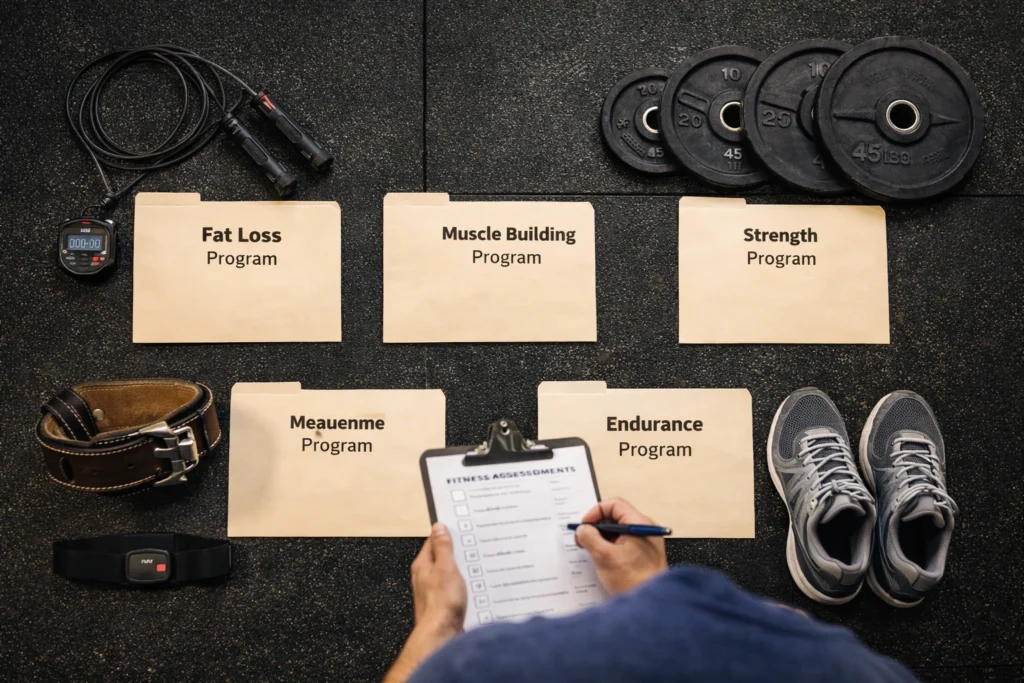
A fat loss program won’t build the strength you want, and a powerlifting routine won’t strip away body fat efficiently. Pick the wrong type, and you’ll work hard for months without seeing the changes you’re after. That’s why your main goal should drive your program choice. So let’s walk through what different goals actually require:
- Fat Loss Programs: Higher rep ranges and shorter rest periods maximise calorie burn during each session. In fact, research from the Catholic University of Murcia found that body fat decreases significantly with 10-30 second rest periods. The reduced rest keeps your heart rate elevated, turning your workout into both a strength and cardio session that supports body composition changes.
- Building Muscle: Progressive overload with moderate rep ranges (8-12 reps) drives muscle growth best. You focus on gradually increasing weight over time, adding 2.5kg every two weeks or so, which stimulates hypertrophy better than lighter weights or maximal strength training alone.
- Strength Programs: These use lower reps (1-5) with heavier weights and longer rest periods (3-5 minutes) to develop maximal force production. It’s about teaching your nervous system to recruit more muscle fibres at once through neural adaptations rather than relying solely on muscle size.
- Endurance Training: If you play sports that require repeated movements (running, cycling, basketball), this is your focus. Longer workout duration and shorter rest intervals build cardiovascular capacity, so your body can sustain effort without gassing out.
- Single Goal Focus: Pick your top priority and commit to it for at least 8-12 weeks. Trying to build maximum strength while cutting body fat means slow progress in both directions instead of real gains in one.
Choose the program type that aligns with your number one priority right now, then switch once you’ve achieved that first goal.
What Beginner Programs Should Include: Meal Plans and Real Results
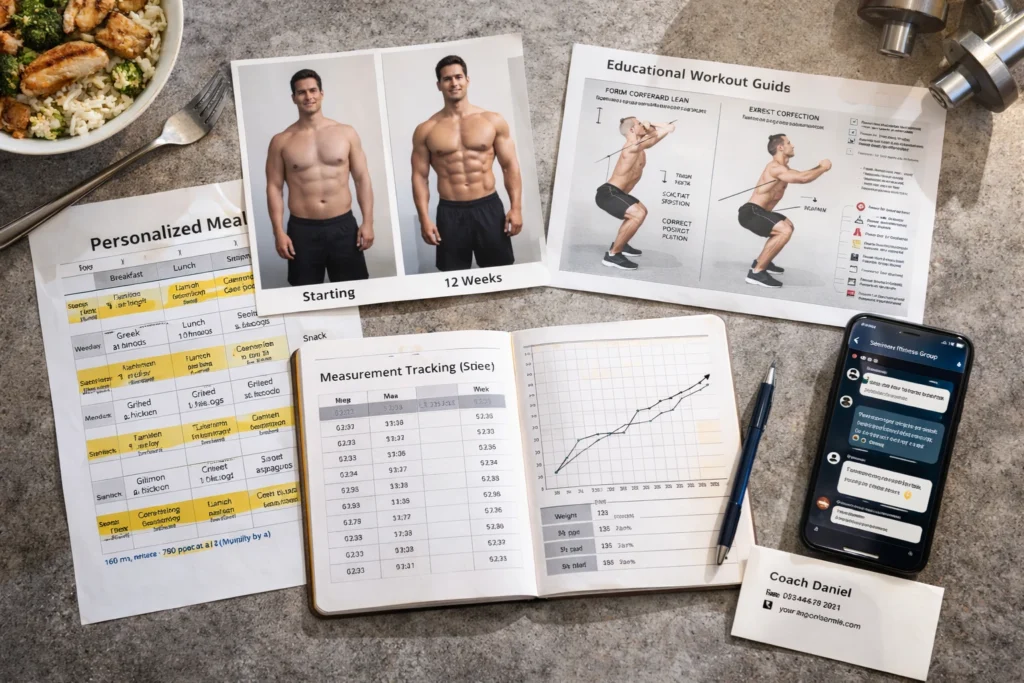
Beginner programs should include personalised meal plans, regular progress tracking, qualified coaching support, and educational resources that teach you how training works. Quality programs deliver all of these, not just workout instructions.
When you have meal plans tailored to your goals, you fuel your workouts properly without needing to become a nutrition expert overnight. For example, knowing you need protein within two hours post-workout or carbs before a session removes the guesswork around what to eat and when.
Tracking your progress is just as important. Photos and measurements often reveal improvements in body composition, even when weight stays the same. This kind of record proves that your efforts are paying off, keeping motivation high when results feel slow.
Access to qualified coaches ties into that progress, too. Form corrections happen early, preventing bad habits that limit future gains. Someone spotting that your squat depth is off in week two saves you from knee issues in month six.
Beyond the physical training, educational resources help you understand why exercises work, which allows you to train smarter over time. In-club community support rounds things out by keeping you motivated when progress feels slow, because seeing others push through similar challenges reminds you that plateaus are temporary.
Take the First Step Toward Your Fitness Goals
Choosing the right fitness program doesn’t have to feel overwhelming once you understand where you stand and what you’re working toward. You don’t need to reinvent the wheel. Pick a program that matches your current level and aligns with your main goal.
The first step is assessing honestly where you are right now. If you’re within your first year of training, beginner programs build the foundation you need without risking burnout or injury.
Ready to start today? I Am Capable Fitness Coaching offers tailored programs for every level, from the Beginner Fit Package to advanced training options. Join a program designed to support your goals with coaching, meal plans, and a community that keeps you consistent.