
Guided fitness training beats self-guided workouts because it provides accountability, expert programming, and progress tracking that solo training rarely delivers.
For instance, you’ve downloaded the fitness app, watched YouTube tutorials, and even bought dumbbells. Three months later, those dumbbells are holding your bedroom door open.
That’s the reality for most people who try training alone. And frankly, most quit within 12 weeks because they’re missing the direction and support. The appeal of self-guided training is obvious because it sounds cost-effective and flexible.
The problem is that it leads to wasted time, poor form, and frustrating plateaus. This article breaks down why structured guidance works, from accountability systems to progress tracking, and how expert coaching delivers the consistent results you’re after.
The difference starts with accountability.
Why Workout Accountability Changes Everything

Workout accountability increases consistency by creating external pressure to show up and perform. What’s more, external accountability creates the commitment that internal motivation struggles to sustain over time. Accountability works in three powerful ways.
Someone Expects You to Show Up
Our expert coaches have noticed that having a personal trainer or workout buddy increases gym attendance by 40 to 50%. When money or social commitment is on the line, excuses disappear fast. That social pressure becomes a powerful motivator, getting you through the door even on days when your energy levels are running low.
You Push Harder With an Audience
Accountability partners push you through sets you’d quit on alone. Having someone watch changes how hard you’re willing to work.
Research backs this up: people lift heavier weights when training with a partner compared to solo sessions. Those final challenging reps that drive real strength training progress become easier to push through when someone’s there supporting you.
Regular Check-Ins Keep You Honest
Weekly progress reviews reveal patterns you’d ignore when training solo. For instance, if you know someone will ask about your week, you’ll keep your effort consistent between training sessions. These check-ins create a feedback loop that helps you stay accountable to your fitness goals and maintain momentum.
These three factors combined explain why workout accountability drives better results. However, accountability isn’t enough if you don’t know what you’re doing each session.
Structure Keeps Your Training Consistent

Accountability only works when you’re following a clear, structured workout plan.
So walking into the gym without a plan creates decision fatigue. What this means is that you waste 10 to 15 minutes staring at equipment and questioning every choice. Most people default to whatever machine looks least intimidating.
On the other hand, structured workout routines progress logically and help you improve through principles recommended by Australian health guidelines. Let’s be honest, when you know exactly what exercises to use, confidence builds session by session.
Speaking of guidance, let’s talk about the person who creates that structure.
The Role of a Personal Trainer in Your Fitness Journey
People training with certified personal trainers see 30% faster strength gains, according to sports medicine research. This happens because expert guidance corrects mistakes you can’t spot alone.
Let’s discuss the three ways personal trainers accelerate your progress.
- Form Corrections Prevent Injury: A personal trainer spots hip shifts during squats or shoulder shrugging in deadlifts that mirrors can’t reveal. These small errors compound into chronic pain over time.
- Programs Adapt to Your Recovery: Stressed from work or short on sleep? Your coach adjusts intensity to prevent overtraining. This flexibility becomes important when life gets hectic, particularly for anyone managing health conditions that affect recovery.
- Plateau Solutions Come From Experience: When progress stalls, trainers pinpoint whether programming, nutrition, recovery, or technique needs fixing. They modify your training before the frustration pushes you to walk away.
These adjustments require tracking what’s working and what isn’t, which brings us to progress measurement.
Tracking Progress With Guided Fitness Training
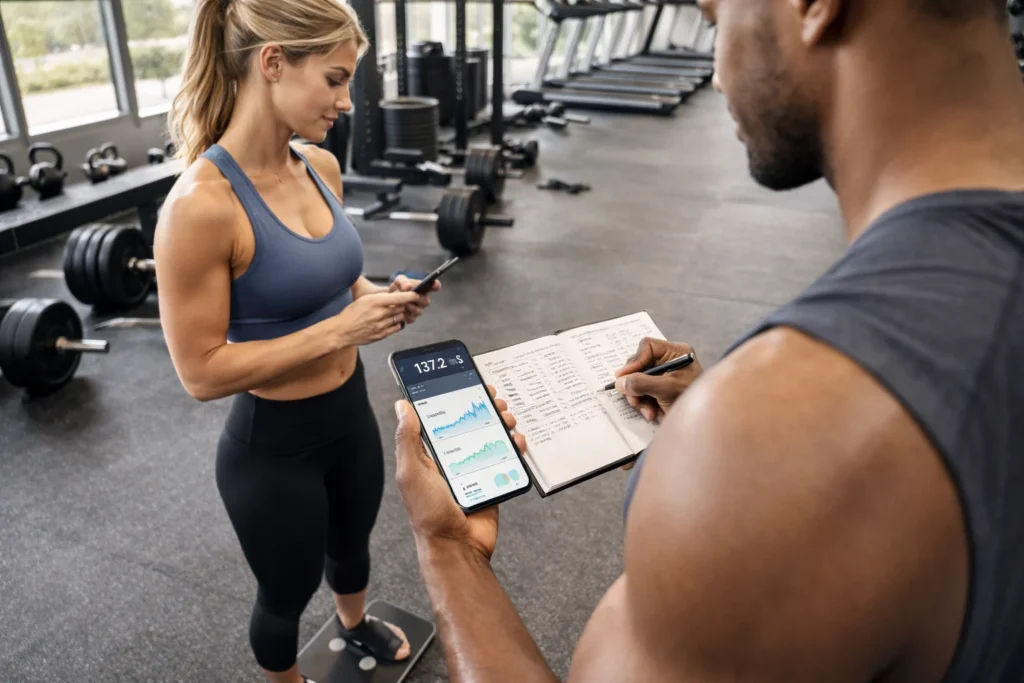
Progress tracking separates people who achieve goals from those who spin their wheels. Without it, you’re guessing whether your workouts are working. Guided fitness training solves this doubt by using multiple methods to keep you moving forward.
|
Self-Guided Training |
Guided Fitness Training |
|
“I think I’m getting stronger.“ |
Weight increases are documented every 2-3 weeks |
|
Inconsistent workout logging |
Every session is tracked with reps and sets |
|
No idea why progress stopped |
Assessments identify exact issues |
|
Motivation drops when the scale doesn’t move |
Multiple metrics show progress |
Regular assessments reveal where your training routine needs adjustments before months get wasted. The real power shows up when you see documented improvements in rep counts or reduced rest times. These numbers keep motivation high when visual changes slow down.
Believe it or not, our members often discover they’re stronger even when scales haven’t budged. They just weren’t tracking the right numbers.
But what happens when you ignore these principles and train alone?
Why Going Solo Often Leads to Plateaus
Going solo leads to plateaus because self-guided training lacks progressive overload and expert adjustments that keep your body adapting. Most people repeat comfortable workouts until progress stops. Your body adapts to the same stimulus within 4 to 6 weeks, then improvements flatline.
Three patterns explain why solo training fails.
You Stick to Comfortable Exercises
Without guidance, people naturally gravitate toward exercises they’re already good at. The bloke who loves bench press hits chest twice weekly but avoids legs entirely (and wonders why his jeans still fit the same after six months). This imbalanced approach leaves weak points unaddressed.
Progressive Overload Gets Ignored
Most people don’t systematically increase weight, reps, or difficulty over time. Your body needs escalating challenges to keep adapting through resistance training. Without tracking, you’re just maintaining current fitness levels
Plateaus Lead to Quitting
When results stall, solo trainers blame themselves or assume fitness isn’t for them. Without an accountability partner to identify the real issues, frustration builds until you quit. Our research shows that people training alone quit within 12 weeks on average.
These problems don’t exist when you have structured guidance and expert support.
Ready to Ditch the Guesswork?
Training alone keeps you trapped in guesswork, wasted workouts, and frustrating plateaus that steal your progress. The solution exists in structured guidance that combines accountability, expert programming, and consistent tracking to drive real results.
Throughout this article, we’ve covered why accountability changes everything and how structure keeps your training consistent. You’ve seen the role personal trainers play in preventing injury and plateaus, plus why tracking progress separates achievers from quitters.
That’s exactly what I am Capable Fitness Coaching delivers. We take you through every workout, form adjustment, and progress milestone you need to build lasting strength and confidence. Our team provides the structure and support that delivers consistent results.
Start your membership today.