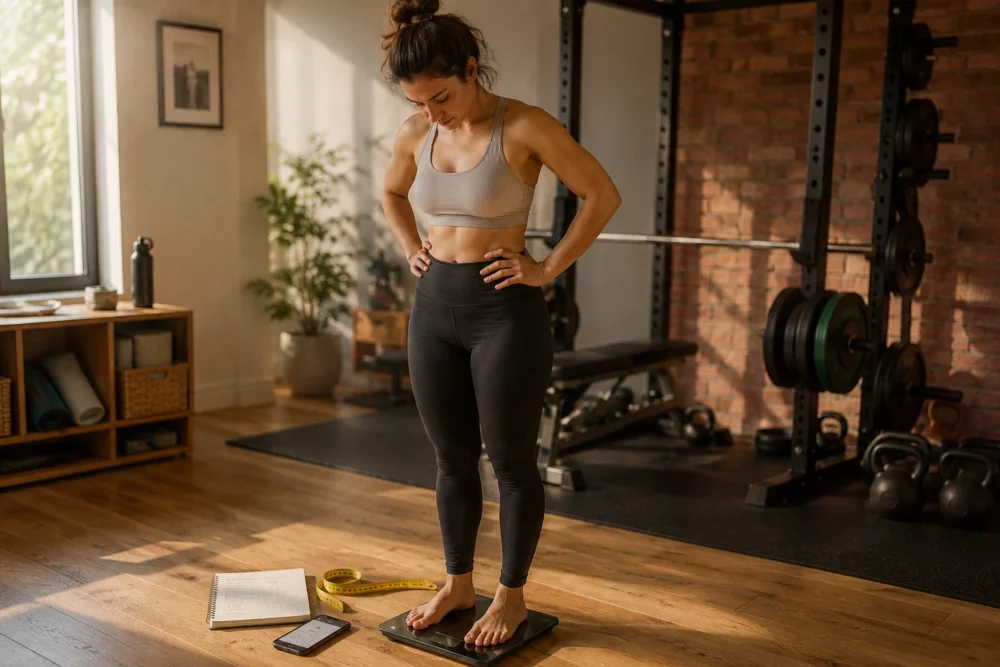
You step on the scale after two solid weeks of training, and the number hasn’t moved. Maybe it’s even crept up a little. That’s a tough moment, especially when you’ve been showing up to every session and watching what you eat.
But weight alone doesn’t tell the full story of the changes happening in your body. Your body goes through a lot of changes during exercise that the scale simply can’t capture.
This article explores what real progress looks like and the best ways to track it. You’ll also learn why your weight can shift around daily, even when your body is steadily changing underneath.
Let’s get into it.
Why Your Weight Changes Even When Your Progress Doesn’t
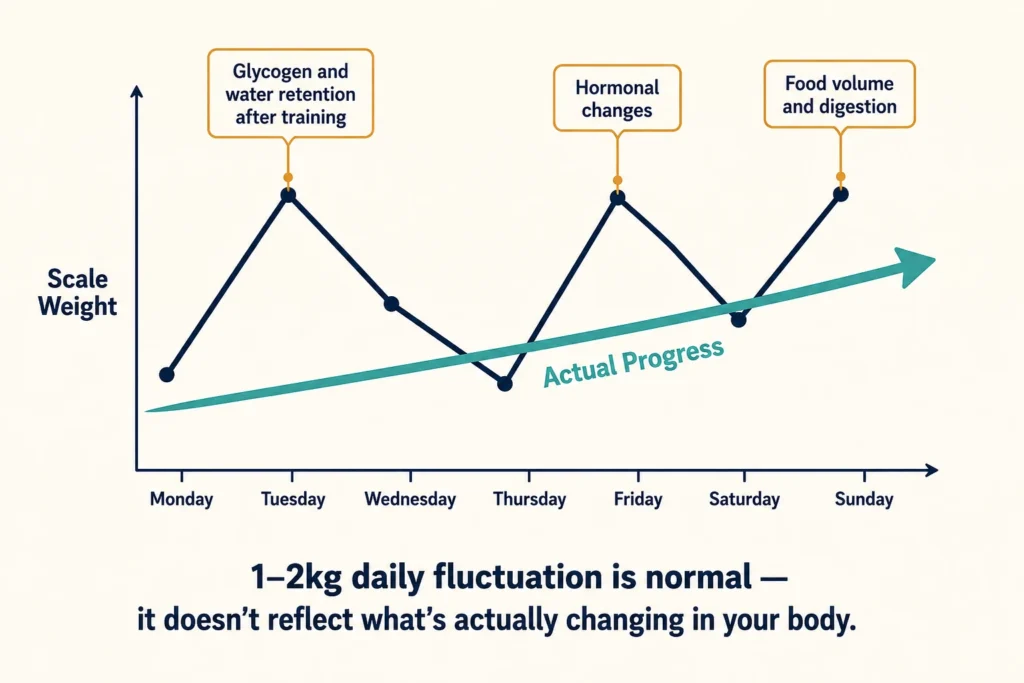
Your weight shifts daily because your body is constantly adjusting fluid levels, digesting food, and responding to hormonal changes. None of those changes reflects whether you’re actually making fitness progress. In fact, your weight can fluctuate by 1–2kg over a few days even when your body fat hasn’t changed.
Training is one reason those changes can happen. When you train consistently, your muscles store more glycogen (your body’s stored fuel source) for energy. That stored glycogen holds onto water, which can then push the scale up even as you’re getting leaner or stronger.
If you’re also building muscle while losing fat, the scale becomes even less reliable. Because muscle is denser than fat, your weight loss may appear slower than your actual progress. We see this all the time with members putting in the hard work but feeling like they’ve hit a wall.
Better Ways to Measure Fitness Progress
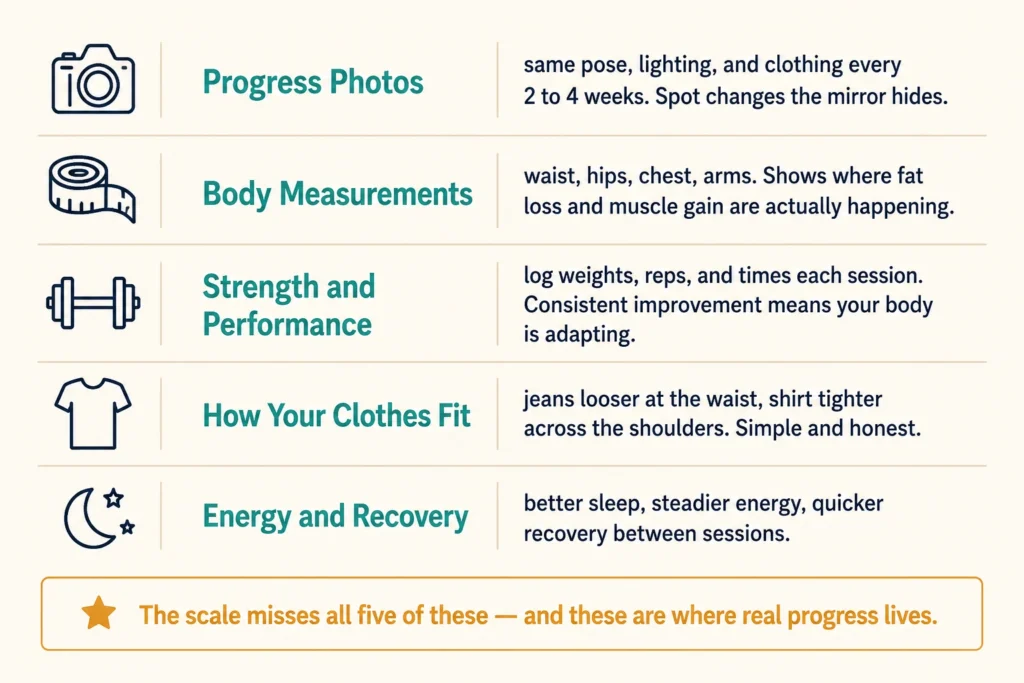
If the scale isn’t reliable, you have better options. These five markers show you exactly where your body fitness stands.
Progress Photos
Take a photo every two to four weeks using the same lighting, pose, and clothing each time. You’ll start to notice changes like a tighter waist or more defined shoulders that no number could tell you. Plus, comparing photos side by side makes gradual changes easier to spot, since seeing yourself every day can make progress easy to miss.
This is especially useful if you’re building muscle while losing fat, as those body composition changes don’t always show up in your weight.
Body Measurements
Grab a tape measure and record your waist, hips, chest, and arms every two to four weeks (morning before eating works best). Unlike body weight, these measurements show you where fat loss and muscle gain are actually happening in your body.
And make sure to measure the same areas under the same conditions each time. This makes it easier to spot how your body is changing week to week, rather than getting caught up in a single result.
Strength and Performance Gains
Most people don’t connect getting stronger with losing fat or changing their body shape. But strength and performance gains are some of the clearest signs your training program is working.
The best way to see that is to log your workouts each session. Record the weights you lift, the reps you complete, and how long it takes. If those numbers improve over time, your body is adapting to training and getting fitter.
Strength training also starts to show up outside the gym. Everyday tasks like carrying groceries or climbing stairs will start to feel easier. That’s your fitness carrying over into real life.
How Your Clothes Fit
Your wardrobe is one of the simplest progress checks you have. If your jeans sit looser at the waist or your shirt fits tighter across your shoulders, your body shape is changing. Just take note of how the same outfit feels every few weeks.
Energy Levels and Recovery
Pay attention to how you feel after workouts and throughout the day. Better sleep, steadier energy, and quicker recovery between sessions are all signs your body is adapting to training, even if your weight hasn’t moved.
These changes are easy to overlook because they happen gradually. Keeping a quick note of your energy levels, sleep quality, and recovery each week makes it easier to spot improvements over time.
How Often to Check Each Metric
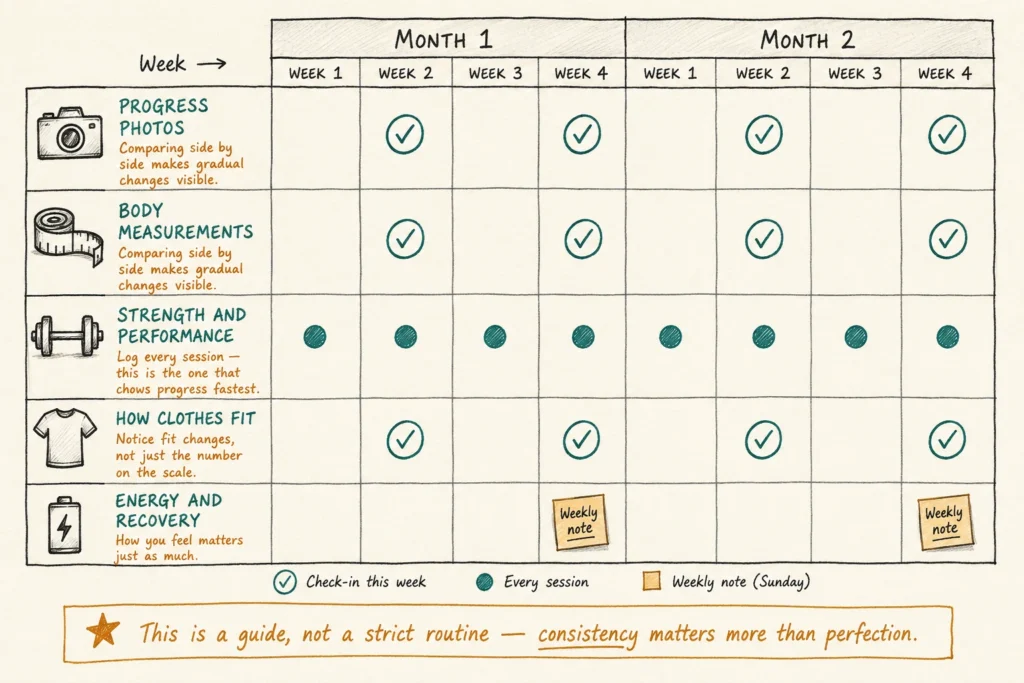
You don’t need to check every metric every day. Small fluctuations can distract you from what’s actually changing, so use this as a rough guide:
| Metric | How Often |
| Progress Photos | Every 2 to 4 weeks |
| Body Measurements | Every 2 to 4 weeks |
| Strength and Performance | Every session |
| How Your Clothes Fit | Every 2 to 4 weeks |
| Energy and Recovery | Weekly note |
Think of this as a guide rather than a strict routine. The goal isn’t to monitor every small change but to build a consistent habit of tracking your progress. If you find it hard to stay organised, a workout tracking app like Strong or Hevy can keep your photos, measurements, and workout logs together in one place.
Don’t Let the Scale Define Your Progress
Your weight is only one data point, and it doesn’t tell the full story of your progress. Photos, measurements, strength gains, and how your clothes fit can show changes the scale misses.
Pick one or two of these methods and start tracking them this week instead of relying on daily weigh-ins. If you’d like more guidance, I Am Capable Fitness Coaching builds training plans around real results rather than a single number on the scale.
Join today, and we’ll match you with a coach who tracks the right markers from day one.
Frequently Asked Questions
The sections above cover the main ways to track progress beyond the scale, but you may still have a few practical questions. These answers cover some of the most common ones.
How do I stay motivated when progress feels slow?
Setting small, specific fitness goals, like adding 2.5kg to a lift or dropping a centimetre off your waist, gives you something concrete to work toward. Hitting those smaller targets regularly keeps your motivation steady far better than chasing one big result.
Can improving my fitness affect my mental health?
Yes. Improving your fitness can support better mental health by reducing stress, improving mood, and helping you sleep better. Many people notice improvements in how they feel day to day before they see major physical changes.
Can I make progress without losing weight?
Yes. It’s possible to build muscle, lose fat, and improve your fitness while your weight stays the same. Progress photos, body measurements, strength gains, and how your clothes fit often reveal these changes before the scale does.
How do I know if my body composition is actually changing?
Body composition changes are often easier to see in progress photos, body measurements, and the way your clothes fit than on the scale. If your waist is getting smaller or your muscles are becoming more defined while your weight stays the same, your body is still changing in the right direction.
How long before I can measure progress effectively?
Most people start noticing meaningful changes within a few weeks, but it depends on what you’re tracking. Strength gains often appear within two to three weeks, while body measurements and progress photos usually need around four weeks to show a clear trend.