
What if your beginner workout plan didn’t feel like a punishment?
Most people dread their first week at the gym. It’s mostly because they don’t know what exercises to do, or feel like everyone is watching them, or push too hard at the start and burn out after a few weeks. If that sounds like you, you’re in the right place.
The thing is, you don’t need to suffer to see results. All you need is a structure that feels realistic and supportive.
In this article, we’ll share a practical beginner workout plan built with training guidance. You’ll learn how to build confidence, focus on proper form, and create steady progress without dreading every session.
We’ll begin by looking at how to structure a plan that feels realistic and manageable.
How to Create a Realistic Workout Plan for Beginners

A realistic beginner workout plan fits into your actual life, instead of someone else’s highlight reel. The best approach is to combine strength training, cardio, and rest days in a balanced way that you can follow for months.
Let’s look at how you can set yourself up for steady progress.
Common Traps Beginners Fall Into
The first trap beginners fall into is jumping into long workouts, heavy weights, or training every single day right away. They try to follow advanced programs without building a solid base first, which often leads to soreness, strain, or burnout. Your body needs time to adapt to new movements and effort levels, so progress works better when you build up gradually.
Another common mistake is copying advanced routines from social media. Many newbies get distracted by exercises promoted by their favourite fitness influencers and switch workouts randomly (which is highly ineffective). Because let’s be honest, what works for someone with five years of training experience probably won’t work for you in your first month.
The third trap is working out without any long-term structure. If you walk into the gym without a routine, it’ll be harder to track progress or make sure you’re training all muscle groups properly. You may move from one machine to another without direction and still feel like nothing is improving.
A Week-by-Week Plan That Fits Your Life
Most beginners see great results with 3-5 strength-training workouts per week. If that sounds like a lot, don’t worry. You can start with just three full-body sessions, then add a fourth day once your strength and endurance improve.
Just make sure your weekly structure balances three things: strength training, cardio, and recovery. This balance supports overall progress, prevents burnout, and reduces the risk of injury. Start with strength training to build muscle and support your joints. Then add cardio to raise your heart rate and improve how efficiently your body uses oxygen (to improve stamina).
And don’t skip recovery either. A good rule of thumb is to take at least one full rest day after every 1-2 consecutive training days. Your weekly plan should also include two to three rest or active recovery days to support steady progress.
Recovery is when your muscles grow stronger and adapt to the effort you put in. If you skip this rest period, your body will stay under constant stress, and that can slow down your results over time.
Sample 5-Day Gym Routine for Beginners
So what does a realistic week actually look like? Here’s a simple example to help you visualise:
- Monday: Full-body strength (squats, push-ups, rows)
- Tuesday: Light cardio (20-30 minutes of walking or cycling)
- Wednesday: Rest or active recovery
- Thursday: Full-body strength (lunges, planks, lat pulldown)
- Friday: Cardio and core work
- Saturday: Rest
- Sunday: Optional light stretching or a short walk
A simple and common setup is full-body workouts on Monday, Wednesday, and Friday. You can move to a four-day split later once you feel comfortable with the basics. The main goal is to find a rhythm that fits your schedule and that you can stick with long-term.
Now, during your first few weeks, we recommend focusing on pacing and learning movements rather than lifting heavy. Start with low weights and high reps when strength training, then gradually increase the weight and intensity as you get stronger. This approach will build confidence, protect you from injury, and help your body adjust to the new routine.
How Proper Training Guidance Improves Your Workout Results
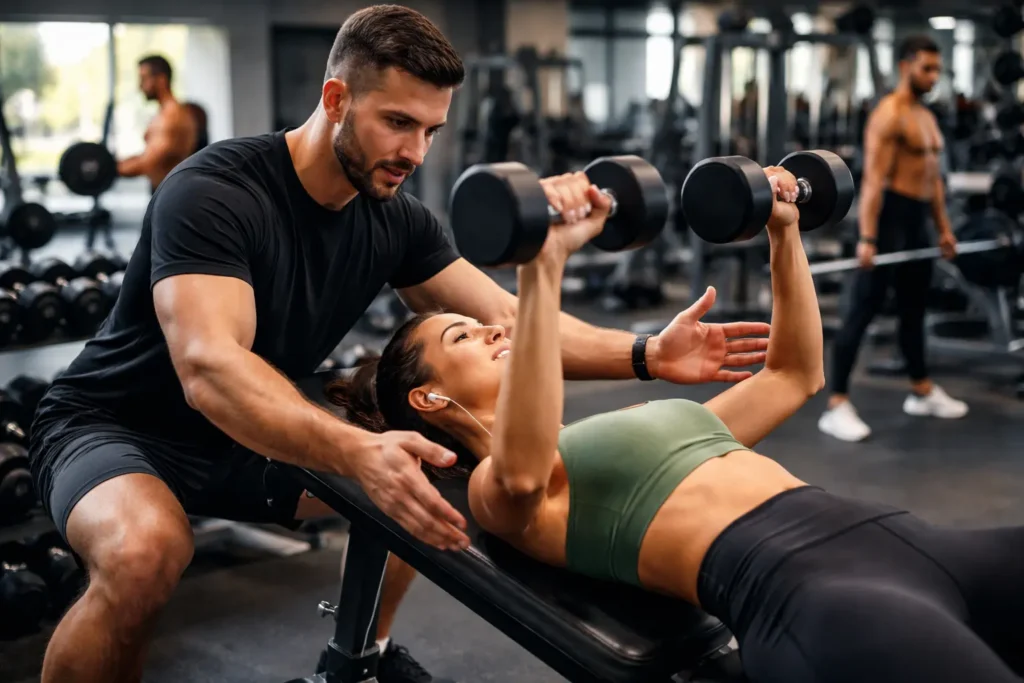
Proper training guidance means knowing what to do once you’re at the gym. The goal is to focus on learning movements, building confidence, and letting your body adapt at its own pace. Here’s how to make that happen.
Focus on Proper Form
Before you focus on lifting heavier weights, pay attention to your form first. For example, if you’re doing a squat, lower your body slowly until your thighs are parallel or slightly below. Then stand back up with control instead of bouncing at the bottom. This will help you target the right muscles and protect your joints at the same time.
Confused about where to start? Well, as a beginner, your best options are the lat pulldown machine, flat bench press, and bodyweight movements like push-ups. These machines will guide your movement, reduce injury risk, and help you feel each muscle working. After you feel comfortable with those basics, you can slowly add dumbbells and free weights to increase the challenge.
Beginner’s tip: Use mirrors to check your posture during each rep. If your gym has personal trainers on the floor, don’t be shy about asking for a quick form check.
Sample Beginner Workout Routine (Full Body)
Now let’s look at what an actual workout might include. Below, we’ll share a simple full-body routine you can follow during your first few weeks at the gym:
Warm-Up (5-10 minutes)
Start with light cardio on a treadmill, bike, or rowing machine. You can also do dynamic movements like arm circles, leg swings, and bodyweight squats. The goal here is to get blood flowing to your muscles before you start lifting. That way, your muscles will stay flexible and ready for heavier lifts, which will lower your risk of injury and help you train more safely.
Core Lifts (3 sets of 10-12 reps each)
These exercises build strength in your main muscle groups, including your legs, back, and chest, and create a solid foundation for your workout. We recommend focusing on controlled movements and proper form, like the following, to get the best results:
- Squats (bodyweight or goblet squat with a dumbbell)
- Lat pulldown (overhand grip, hands slightly wider than shoulder width)
- Dumbbell chest press on a flat bench
Now, if you’ve never used a lat pulldown machine before, here’s how it works. Start by sitting on the machine and adjusting the thigh pad so it feels secure and comfortable under your legs. This will keep your body stable while you move.
From there, grab the wide bar with your palms facing forward and your hands a little wider than shoulder-width apart. Pull the bar down toward your chest by pulling your elbows down and slightly back. The goal is to pause for a moment here and squeeze your back muscles, then slowly let the bar go back up before doing the next rep.
Accessory Work (2-3 sets of 10-15 reps each)
Accessory work is exercises that support your main lifts (squats, presses, and pull movements) by strengthening smaller muscles and improving stability and balance. These movements prevent imbalances and improve overall performance.
You can use a weight or variation that lets you keep good form while still feeling challenged, like:
- Calf raises
- Planks (hold for 20-30 seconds)
- Push-ups (lower your knees to the floor to make the movement easier if needed)
Remember, you want to start with a weight that you can lift 10 to 15 times with proper form. That’s why it’s better to begin with 2 to 3 sets of 8 to 12 repetitions, and slowly progress to 3 sets or more. If you feel completely exhausted before finishing your sets, you may be pushing too hard.
Stay Motivated and Track Your Fitness Journey Without Burnout
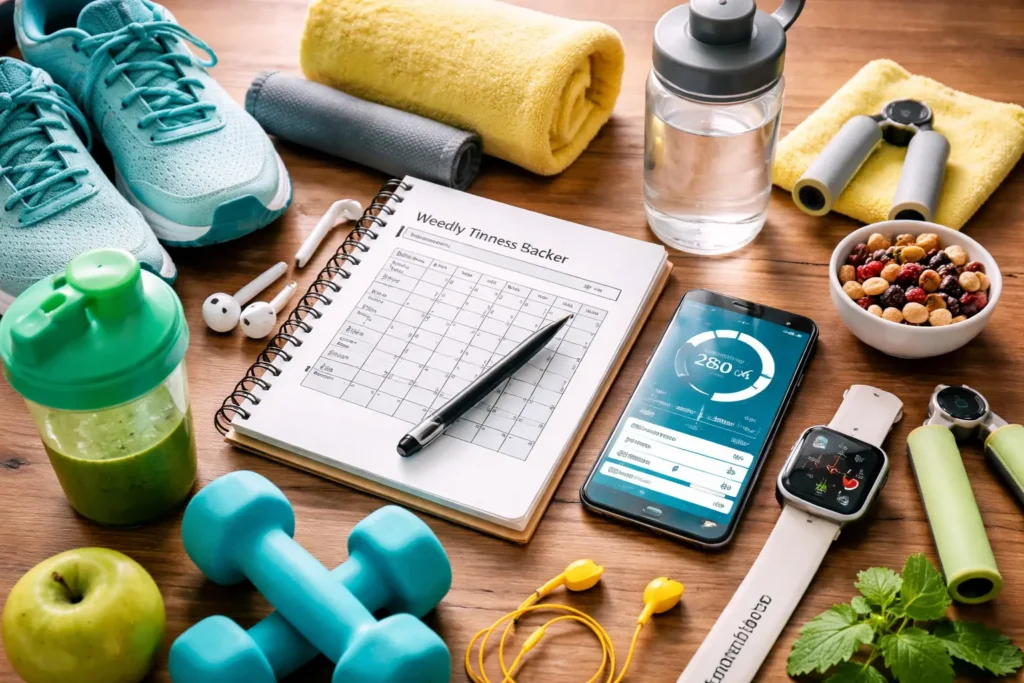
So, how are you feeling about getting started? If you’re a bit nervous, that’s completely normal. You’ll find motivation as you see steady progress and small improvements that you can actually maintain over time.
Now, gym access is fantastic, but without proper guidance, many beginners quit within the first few months. A structured fitness coaching program can help you avoid that by showing you when to push harder, when to rest, and how to balance strength training with recovery. Plus, you’ll learn when to adjust your workout plan so you keep making progress without burning out.
Remember, starting your fitness journey is already a big win on its own. You’re going to the gym to get fit. And every single person you see in there started exactly where you are right now.
If you want training guidance and a workout membership that supports your goals, check out I Am Capable Fitness Coaching. We’ll help you build a plan that fits your lifestyle.